Keep me updated!
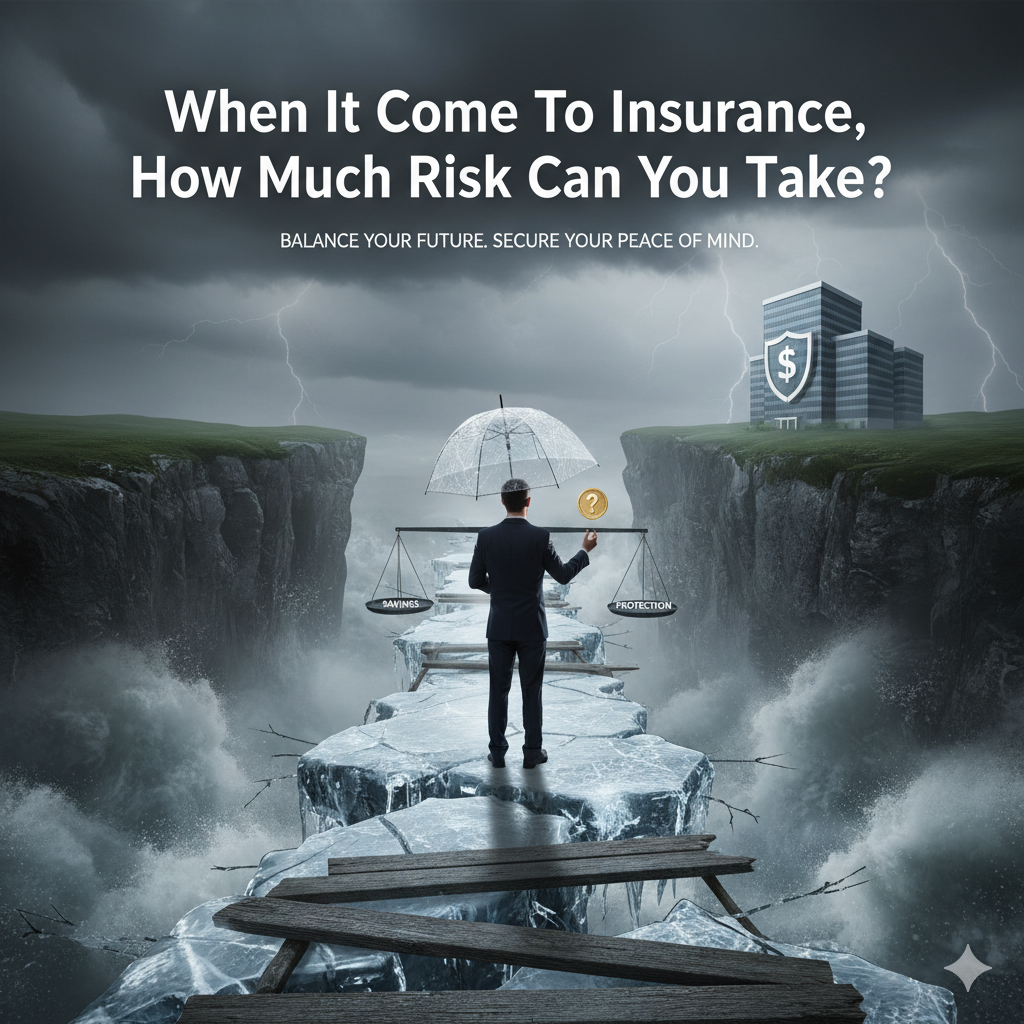
Insurance companies exist to take on financial risk — but every consumer also makes daily decisions about what risks to accept or transfer. Your deductible choices, your assets, and your comfort level with potential loss all reveal how much risk you’re willing to shoulder yourself. Here’s how to think clearly about self-insuring vs. relying on an insurer.
Insurance policies almost always include deductibles — the amount you pay out of pocket before coverage kicks in. A high deductible means you’re willing (and able) to absorb more financial risk. A low deductible means you want the insurer involved sooner because you may not have the cash to cover a large surprise expense.
The rule is simple:
higher deductible = lower premium, and
lower deductible = higher premium. The more financial exposure the insurer bears, the more you pay.
How Risk Tolerance Shows Up in Everyday Choices
Think about that unused diamond ring worth around $20,000. If you’ve never insured it, that’s a risk tolerance decision. Maybe you don’t want to pay for protection, or maybe you’re comfortable knowing you could absorb the loss. Insurance can’t cover sentimentality — only financial value.
You make similar decisions with your car. As insurance prices rise, you may question whether full physical-damage coverage is worth it if the vehicle is older or low-value. If your car were stolen or totaled tomorrow, could you afford the loss? If yes, dropping certain coverages might feel reasonable. If no, that’s a clear sign the risk should stay with the insurer.
Homeownership Raises the Stakes
If you have a mortgage, your lender requires homeowners insurance to protect its collateral. You don’t get to decide whether to self-insure — the bank makes that call.
But once your mortgage is paid off, the decision becomes yours alone:
- Do you keep insuring your home to protect the full value?
- Or do you choose to self-insure and take on the risk yourself?
One homeowner may think, “Why insure something no one forces me to?” Another may think, “My home is my biggest asset — I’m not risking that.” Neither is wrong; they simply have different risk tolerances.
Keep me updated!
Who Should Take the Risk — You or the Insurer?
Ultimately, every asset is insured by someone — either
you, using your own money, or an
insurance company, using theirs. If your house burns down or your car is stolen, someone pays for the loss. The only real question is who.
Before deciding to self-insure, ask yourself:
- How much loss could I comfortably afford?
- What assets are essential to my financial stability?
- What risks am I truly prepared to take on alone?
Being an informed, thoughtful consumer means aligning your insurance choices with your actual financial capacity — not wishful thinking. Losses do happen. Make sure the protection you choose today is something you can live with tomorrow.
Keep me updated!